Nonfiction November Ideas for your Elementary School Library
Are you looking for Nonfiction November ideas for your elementary school library? In addition to reading aloud engaging nonfiction picture books, here are four engaging activities to get your students up and moving while they learn more about informational text!
What is Nonfiction November?
Nonfiction November is a month-long opportunity to focus on nonfiction in your elementary school library. Why take a month to focus on nonfiction?

- Builds background knowledge: Nonfiction helps students learn about the world—animals, history, science, and real people—giving them the context they need to understand more complex ideas later.
- Strengthens comprehension skills: Features like headings, captions, and diagrams teach students how to find and organize information, which improves reading comprehension across all subjects.
- Inspires curiosity and real-world connections: Nonfiction encourages students to ask questions, explore their interests, and see how reading connects to real life and their own experiences.
Here are four ideas to help you share nonfiction with your students during November, or any month that you choose!
Nonfiction November Ideas for K-2
Musical Chairs with Nonfiction Books for K-2

Library Musical Chairs is such a fun way to celebrate Nonfiction November with your K–2 students! It mixes movement, choice, and book exploration in a playful, low-pressure way. The idea is simple: students move around the circle of chairs while music plays, and when it stops, they explore the nonfiction book on the nearest chair. For your youngest learners, that exploration might mean doing a picture walk, checking out text features, or reading a few words.
Because no one ever gets “out,” everyone stays engaged and excited — and they get to see lots of different nonfiction titles. After a few rounds, students naturally notice things like captions, headings, and diagrams. It’s a lively, social way to get kids curious about nonfiction, spark conversations about informational topics, and help your students feel confident choosing nonfiction books — all perfect for Nonfiction November.
Musical Books with Nonfiction Books for K-2
Check out the blog post Play Musical Books to Promote Reading to read about a super fun, low-prep idea that’s perfect for Nonfiction November with K–2 students. Your students will move around the nonfiction shelves while music plays, and when it stops, they grab the nearest book to explore. You could also play this game by placing nonfiction books on tables, instead of having your youngest students browsing through all of the shelves. In the long term, I recommend creating a separate section of the library for your easy nonfiction, near your “everybody” picture books. We want our students to start the habit of checking out and reading nonfiction books early.
The movement of musical books keeps things fresh and helps students step outside their usual book choices. Plus, since no one ever gets “out,” everyone stays active and engaged. After a few rounds, kids will have sampled all kinds of nonfiction books, noticed cool text features, chatted about what they discovered, and maybe even found new favorites — all while giving Nonfiction November a fun, energetic boost!
Nonfiction November Ideas for 3-5
Nonfiction Bingo for 3-5
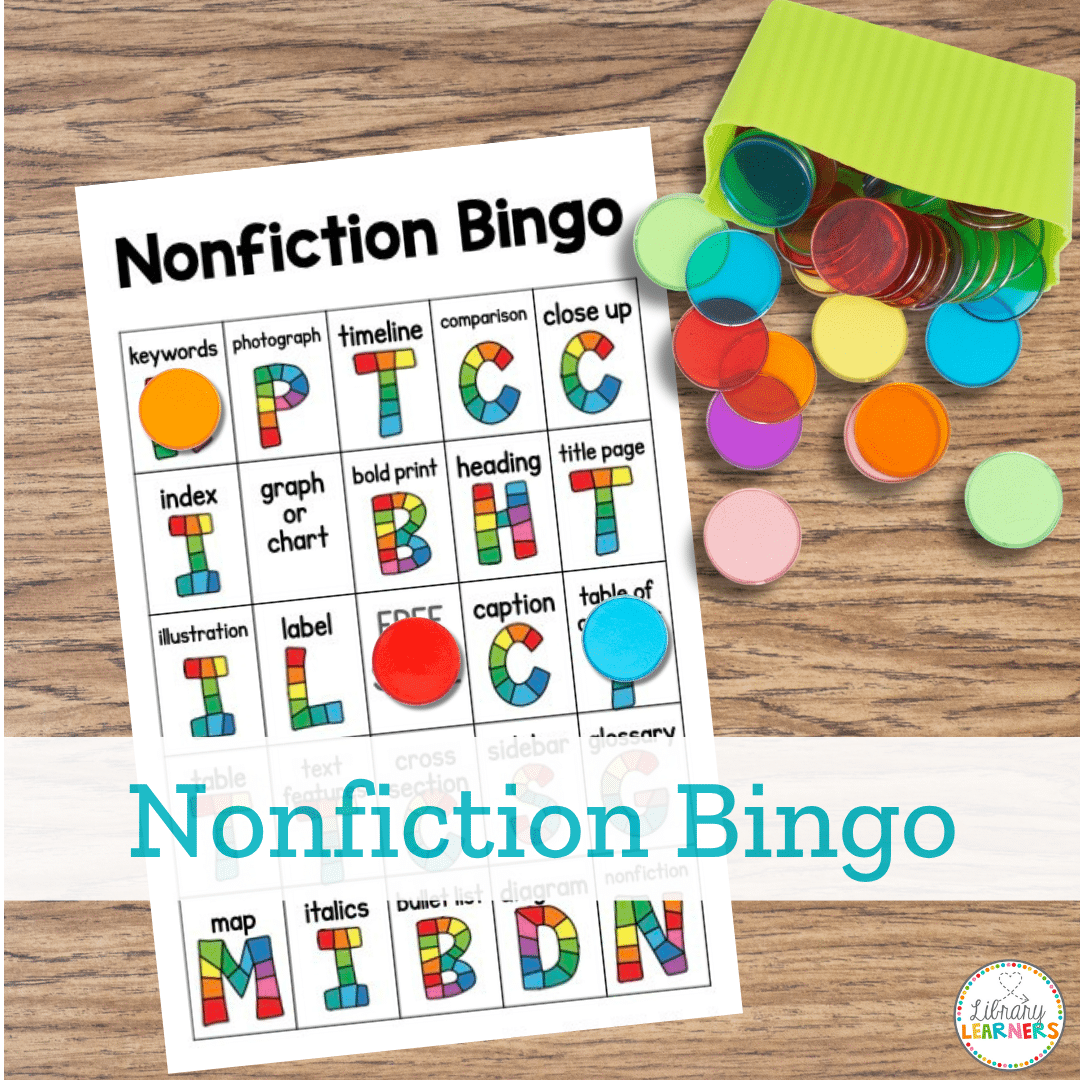
During Nonfiction November, playing this Nonfiction Text Features Bingo game can be a powerful way to engage 3rd, 4th, and 5th grade students in exploring the structure of nonfiction texts. This resource is designed for grades 3–5 and includes printable bingo cards, editable Google Slides, and teaching tips to adapt the game to your library or classroom setting. By turning the often dry task of identifying text features (such as captions, headings, diagrams, glossaries, indexes, sidebars, etc.) into a game, students are more motivated to scan nonfiction books and talk about what they observe.
As they play bingo, your students will reinforce their ability to locate and interpret these features — skills that directly support comprehension of nonfiction texts. Over multiple rounds, students will deepen their awareness of how authors organize information and grow more confident in navigating and making sense of informational texts. This makes the bingo game a lively, low-prep part of your Nonfiction November library lesson plans.
Nonfiction Dewey Mazes for 3-5
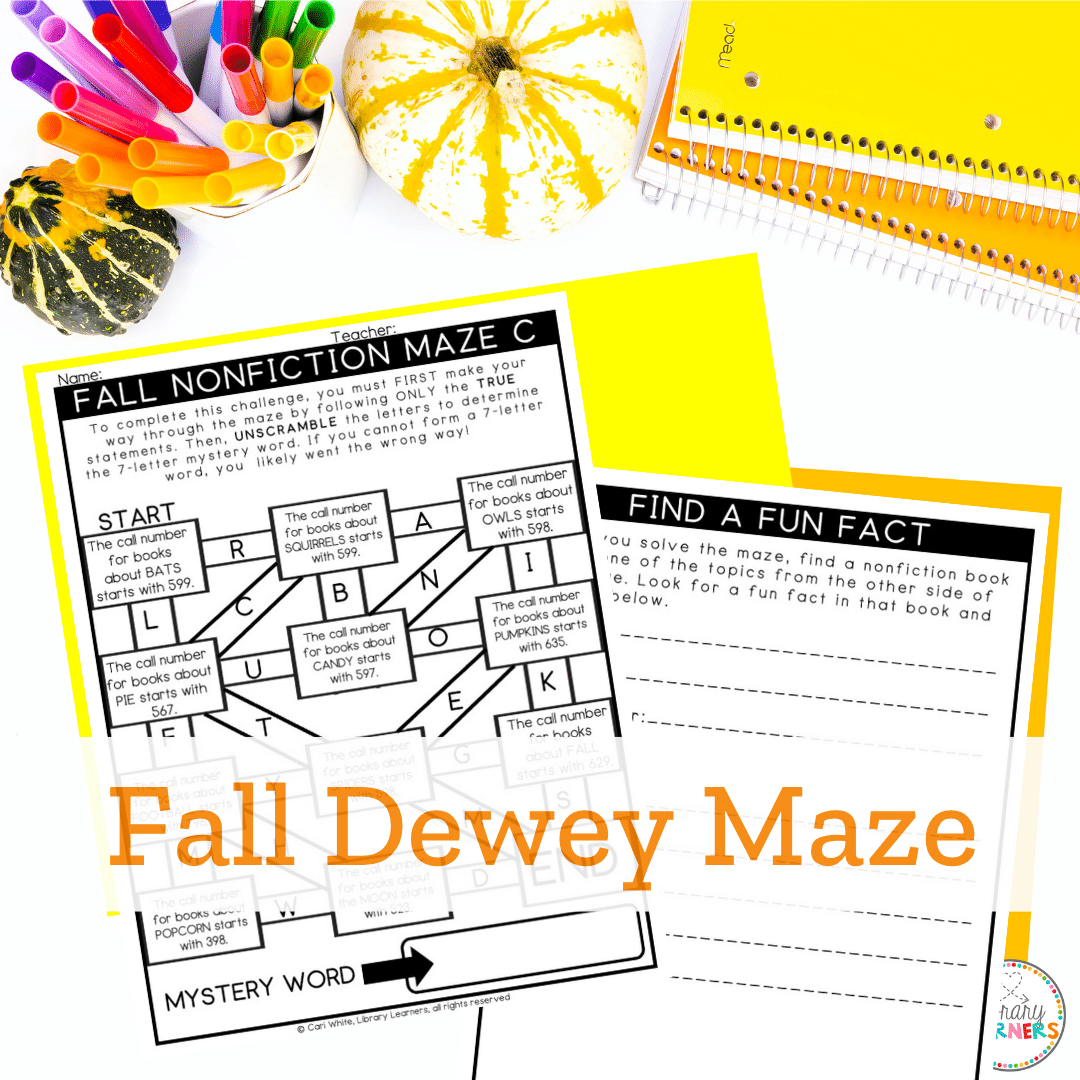
Bring a playful twist to mastering library skills and call numbers with these Fall Dewey Mazes. This maze activity challenges students to navigate through nonfiction categories tied to fall themes (like owls, pumpkins, spiders, and squirrels), making the abstract idea of call numbers concrete and contextually meaningful. As students partner up and work through the maze, they reinforce their understanding of how nonfiction books are organized, practice using the library catalog (or shelf browsing), and develop confidence in locating nonfiction resources.
Moreover, the fall-themed content aligns nicely with seasonal nonfiction reading, so after they complete the maze they’re primed to explore new informational texts in those subject areas. Librarians can use this engaging activity to check students’ understanding of call numbers during Nonfiction November.
Nonfiction November Idea Links
Here are the links to the nonfiction November ideas discussed in this blog post:
- K-2 Musical Chairs with Nonfiction Books
- K-2 Musical Books on the Nonfiction Shelves
- 3-5 Nonfiction Bingo
- 3-5 Nonfiction Dewey Mazes
H2: Save these Nonfiction November Activities for Later
Click the image below to save this blog post to your Pinterest board.

Happy reading!


